
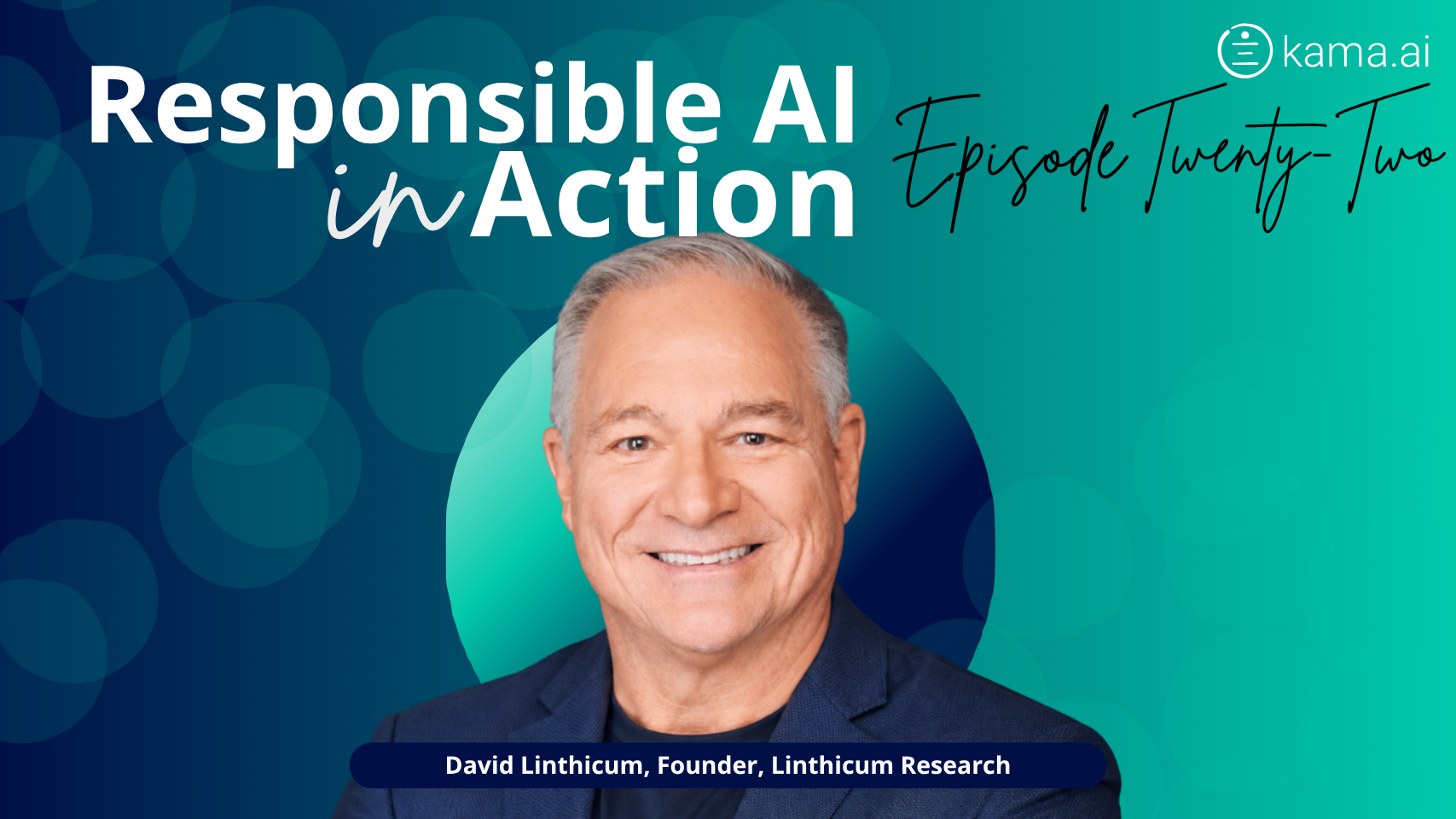
Responsible AI in Action – Episode 22: Why Most Enterprise AI Projects Fail, with David Linthicum, Founder of Linthicum Research
In this episode of Responsible AI in Action, Charles Dimov is joined by David Linthicum, Founder of Linthicum Research, globally recognized AI and cloud computing thought leader, five-time best-selling author, and former Chief Cloud Strategy Officer at Deloitte Consulting.
As organizations continue investing heavily in artificial intelligence, many are discovering that implementing AI successfully requires far more than selecting the latest models or deploying new technologies. Despite enormous investment across every industry, many enterprise AI initiatives continue to struggle with poor adoption, escalating costs, and disappointing business outcomes.
Drawing on decades of experience helping organizations design enterprise technology strategies, David explores why so many AI projects fail to deliver their expected return on investment. The conversation examines how businesses often pursue AI simply because they can, rather than first determining whether AI is the right solution for the problem they are trying to solve. Instead of following industry hype, organizations must develop the architectural discipline to evaluate where AI truly adds value—and where traditional deterministic systems remain the better choice.
The discussion also examines one of the fastest-growing challenges facing enterprise AI: cost. As organizations increasingly rely on large language models and generative AI services, operational expenses can quickly outpace business value when governance and architectural oversight are missing. David explains why responsible AI architecture is not simply about choosing the most powerful model, but selecting the minimum viable technology capable of delivering measurable business outcomes while maintaining long-term sustainability.
Beyond technology, the episode explores the broader organizational impact of AI adoption. Charles and David discuss the growing narrative around AI-driven job displacement, why many companies are using AI as a convenient explanation for broader workforce changes, and how organizations can adopt a people-first approach that augments employees rather than replacing them. They argue that responsible AI requires balancing innovation with governance, business value, and human-centred decision-making.
From AI governance and enterprise architecture to cost management and organizational change, this episode offers practical guidance for leaders looking to move beyond AI hype and build solutions that deliver sustainable business value.
Episode Highlights
In this conversation, Charles and David explore why responsible AI begins long before a model is deployed. Successful AI initiatives start by identifying the right business problems, selecting the appropriate technology, and ensuring governance remains central throughout the entire lifecycle.
The discussion examines how today’s AI enthusiasm closely mirrors the early days of cloud computing, where organizations often over-invested before fully understanding operational costs and long-term value. David explains why many enterprises may soon face an AI correction as operational expenses rise and organizations begin reassessing which AI deployments genuinely deliver return on investment.
The conversation also explores the importance of architectural discipline, demonstrating why organizations should resist adopting AI simply because it is available. Instead, responsible AI requires careful evaluation of each use case, ensuring AI is only applied where probabilistic systems provide meaningful advantages over traditional software.
Finally, Charles and David discuss the future of enterprise AI, emphasizing that the greatest opportunity lies not in replacing people, but in automating repetitive work, improving decision-making, and enabling employees to focus on higher-value activities. When implemented responsibly, AI becomes a force multiplier for organizations while strengthening—not diminishing—the human workforce.
Watch the full episode now:
Watch Episode 22 of Responsible AI in Action to learn:
- Why many enterprise AI projects fail to deliver expected ROI
- Asking “Should we use AI?” instead of simply “Can we use AI?”
- Choosing the right AI use case before investing
- The hidden operational costs of large language models
- Responsible AI architecture and governance
- Balancing AI capability with business value
- Lessons from the cloud computing era for enterprise AI
- Avoiding hype-driven AI adoption
- Building sustainable AI strategies with long-term ROI
- Why governance and architectural oversight reduce AI risk
- AI as a tool to augment employees rather than replace them
- Preparing organizations for the next phase of enterprise AI adoption
As organizations continue accelerating their AI investments, success will depend less on deploying the newest technology and more on making disciplined decisions about where AI truly creates value.
Responsible AI is not about building AI everywhere. It is about building the right AI, for the right use cases, with the right governance and the right business outcomes in mind.
🎧 Watch Now
Learn more – Follow on LinkedIn: David Linthicum
Watch more of David on YouTube: David Linthicum Is Not AI