
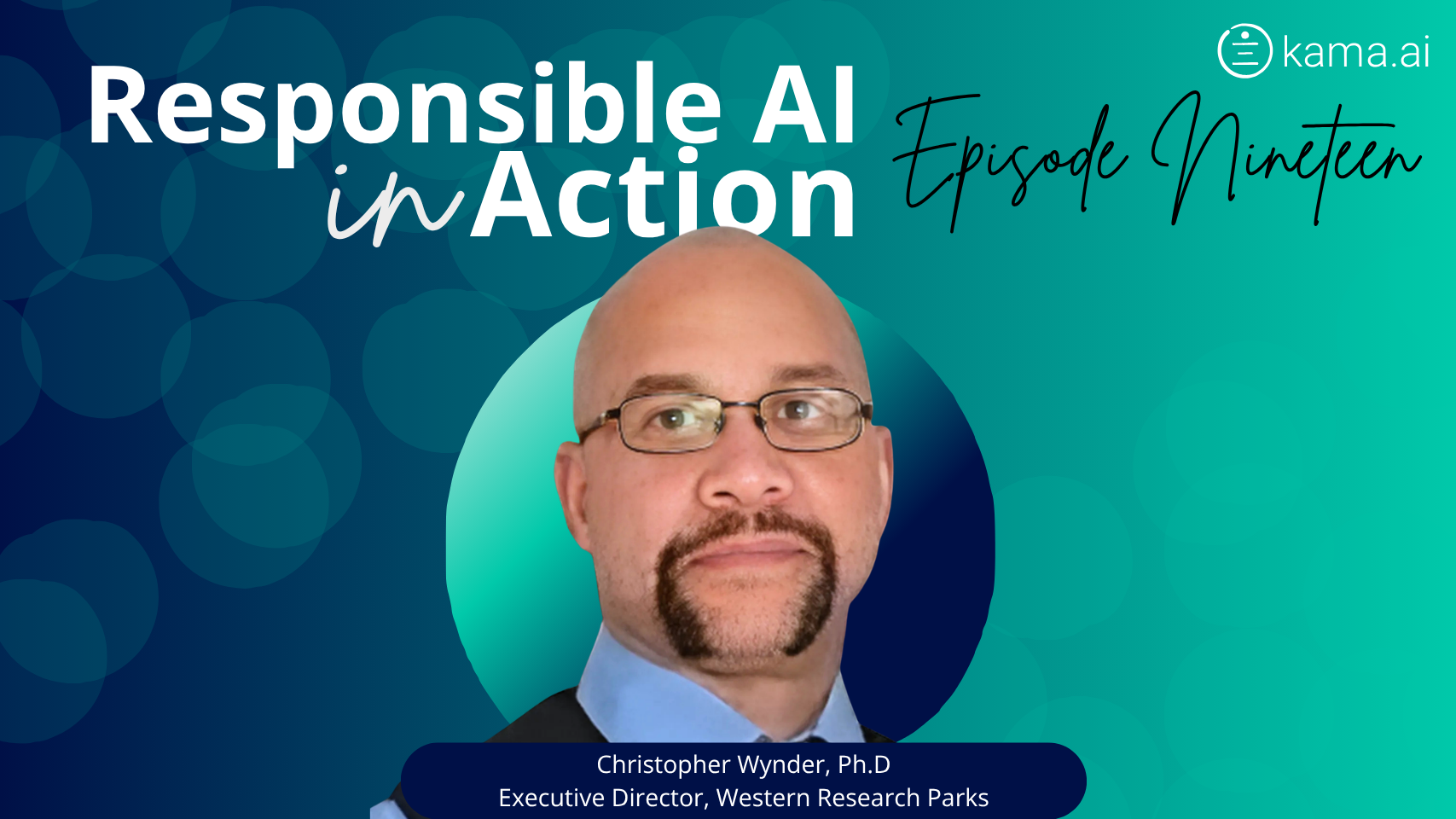
Responsible AI in Action – Episode 19: From AI Pilots to Real-World Impact, with Christopher Wynder, Ph.D, Executive Director, Western Research Parks
In this episode of Responsible AI in Action, Charles Dimov is joined by Christopher Wynder, Ph.D., Executive Director of Western Research Parks, one of Canada’s leading innovation ecosystems supporting research commercialization, technology development, and startup growth.
As organizations race to adopt AI, many are discovering that achieving meaningful business value requires much more than deploying new technology. This conversation explores why so many AI initiatives struggle to move beyond successful pilot projects and what it takes to implement AI responsibly in complex, highly regulated environments.
Drawing from his experience working with research organizations, healthcare institutions, startups, and innovation networks, Dr. Wynder examines the growing importance of sovereign AI, governance, and trust in enterprise adoption. The discussion highlights how organizations are shifting away from broad AI experimentation and toward focused, practical applications designed to solve specific operational challenges while maintaining control over sensitive data.
The episode also explores one of the most overlooked realities of AI transformation: the human side of organizational change. Dr. Wynder explains why successful AI implementation requires a deep understanding of how people actually work, why process improvement often matters more than technology selection, and how organizations can use AI to augment employees rather than replace them.
From healthcare innovation and data sovereignty to startup strategy and operational efficiency, this episode offers practical insights for organizations looking to move beyond AI hype and toward sustainable business outcomes.
Episode Highlights
In this conversation, Charles and Dr. Fatima explore how Responsible AI is no longer just about system performance — it is about understanding human cognitive limits and designing AI systems that support, rather than overwhelm, people.
The discussion examines how AI-generated outputs can create significant verification burdens for employees tasked with reviewing increasingly complex systems. As AI capabilities continue to scale exponentially, organizations may need entirely new approaches to accountability, oversight, and human-AI collaboration.
Dr. Fatima also explores the neuroscience behind cognitive fatigue, burnout, and automation bias, explaining how excessive reliance on AI can gradually reduce critical thinking and increase passive trust in automated systems. In high-stakes environments such as healthcare, pharmaceutical manufacturing, and enterprise decision-making, these risks can have major consequences.
The episode further examines how AI may eventually help humans better manage cognition itself — organizing workloads, identifying mental fatigue, and optimizing how people interact with information throughout the workday.
At the same time, the conversation remains optimistic about AI’s ability to unlock new levels of human creativity, scientific advancement, and innovation when paired with thoughtful governance and responsible implementation.
Watch the full episode now:
Key themes include:
• Why many AI pilots fail to scale beyond experimentation
• The role of sovereign AI in healthcare and regulated industries
• Building governance and trust into AI projects from the beginning
• Understanding human workflows before implementing AI solutions
• Why AI cannot solve people problems without understanding people
• Responsible approaches to AI adoption in healthcare environments
• Using AI to improve operational efficiency without replacing employees
• The importance of cross-functional collaboration in AI deployments
• Practical lessons from startup and innovation ecosystems
• Balancing rapid AI adoption with governance and risk management
• How organizations can identify the right AI use cases
• Preparing for a future with increasingly specialized AI agents
As organizations continue investing in AI, the challenge is no longer simply proving that AI works. The challenge is ensuring that AI can deliver sustainable value within the realities of human workflows, governance requirements, and organizational complexity.
Responsible AI is not about deploying more AI. It is about deploying the right AI, in the right way, for the right problems.
🎧 Watch Now
Learn more – Follow on LinkedIn: Christopher Wynder, Ph.D, Executive Director, Western Research Parks