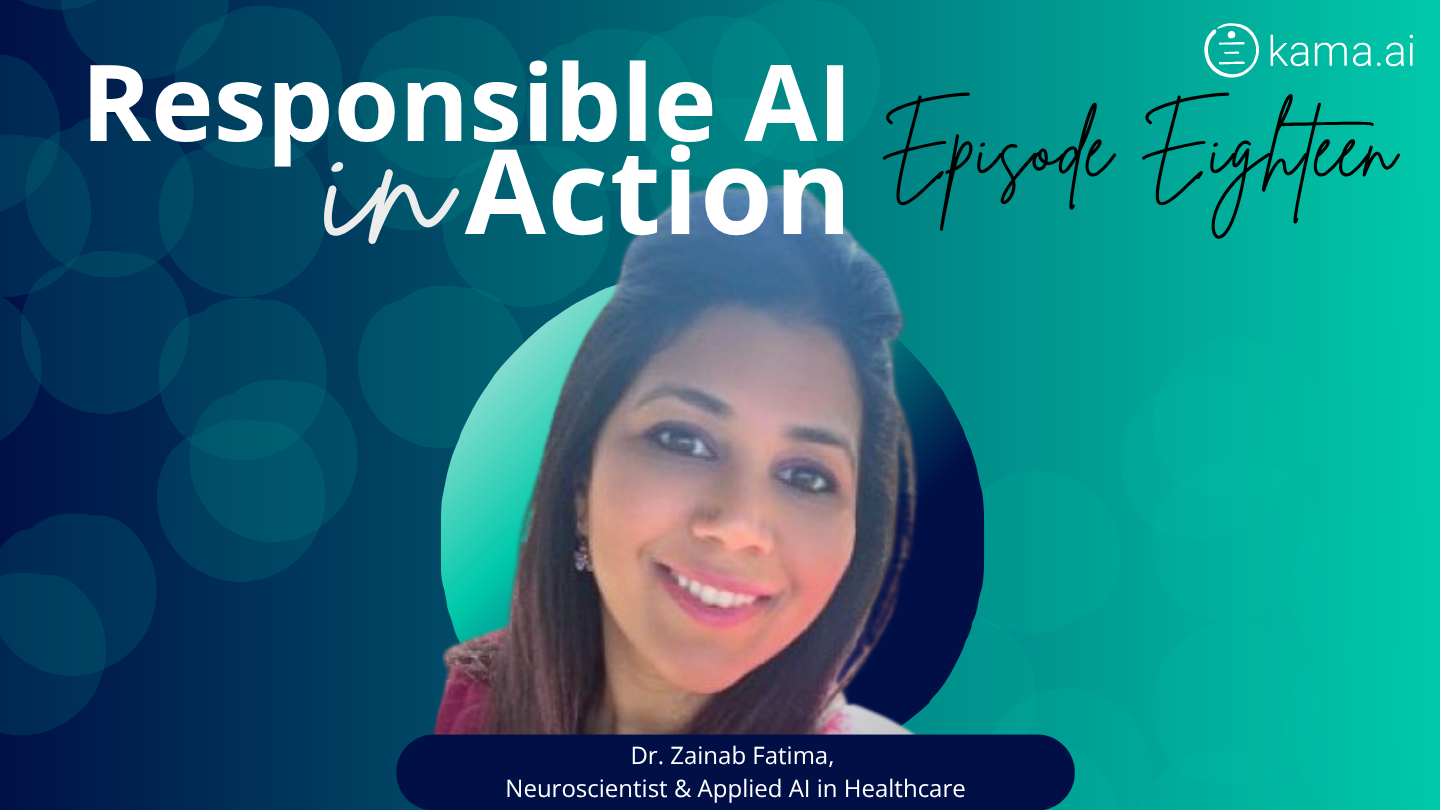
Responsible AI in Action – Episode 18: Cognitive Load, Trust, and the Human Side of AI, with Dr. Zainab Fatima
In this episode of Responsible AI in Action, Charles Dimov is joined by Dr. Zainab Fatima, a neuroscientist and AI strategist working at the intersection of digital health, applied AI, and human cognition.
As AI systems increasingly take over cognitive tasks once performed by humans, this conversation explores one of the most important, and least discussed, challenges in enterprise AI: how AI is reshaping the way humans think, work, make decisions, and manage cognitive load.
Drawing from her background in neuroscience, healthcare, and enterprise AI strategy, Dr. Fatima examines how organizations must rethink accountability, human oversight, and trust as AI systems become more capable and autonomous. The discussion explores the growing “cognitive tax” placed on humans responsible for monitoring AI outputs, the risks of automation bias, and why human cognition itself may become a limiting factor in large-scale AI adoption.
The episode also dives into the future of healthcare and AI-assisted diagnostics, where AI systems are already approaching — and in some cases exceeding — human performance in specialized medical tasks. Dr. Fatima explains why adoption remains cautious, how AI is creating an identity shift within medicine, and where human expertise will continue to play a critical role.
From burnout and decision fatigue to creativity, imagination, and the future division of labor between humans and AI, this episode offers a unique perspective on the human implications of AI transformation.
Episode Highlights
In this conversation, Charles and Dr. Fatima explore how Responsible AI is no longer just about system performance — it is about understanding human cognitive limits and designing AI systems that support, rather than overwhelm, people.
The discussion examines how AI-generated outputs can create significant verification burdens for employees tasked with reviewing increasingly complex systems. As AI capabilities continue to scale exponentially, organizations may need entirely new approaches to accountability, oversight, and human-AI collaboration.
Dr. Fatima also explores the neuroscience behind cognitive fatigue, burnout, and automation bias, explaining how excessive reliance on AI can gradually reduce critical thinking and increase passive trust in automated systems. In high-stakes environments such as healthcare, pharmaceutical manufacturing, and enterprise decision-making, these risks can have major consequences.
The episode further examines how AI may eventually help humans better manage cognition itself — organizing workloads, identifying mental fatigue, and optimizing how people interact with information throughout the workday.
At the same time, the conversation remains optimistic about AI’s ability to unlock new levels of human creativity, scientific advancement, and innovation when paired with thoughtful governance and responsible implementation.
Watch the full episode now:
Key themes include:
• The growing “cognitive tax” created by AI oversight
• Why human verification alone may not scale with advanced AI systems
• Automation bias and the risks of over-trusting AI outputs
• Cognitive fatigue, burnout, and decision overload in AI-driven workplaces
• How neuroscience helps explain human interaction with AI systems
• The future of AI-assisted healthcare and diagnostics
• Why AI adoption in medicine is creating an identity shift for doctors
• The evolving division of labor between humans and AI
• How AI could help optimize human productivity and mental performance
• The importance of preserving critical thinking in the AI era
• Why creativity and imagination remain uniquely human strengths
• Responsible AI governance in high-stakes industries like healthcare and fintech
As organizations continue integrating AI into core operations, the challenge is no longer only about improving efficiency — it is about protecting human cognition, maintaining accountability, and designing systems that support sustainable decision-making at scale.
Responsible AI is not just about what AI can do. It is about understanding how AI changes us.
🎧 Watch Now
Learn more – Follow on LinkedIn: Dr. Zainab Fatima