
AI and Indigenous Languages: Risks and Responsibilities
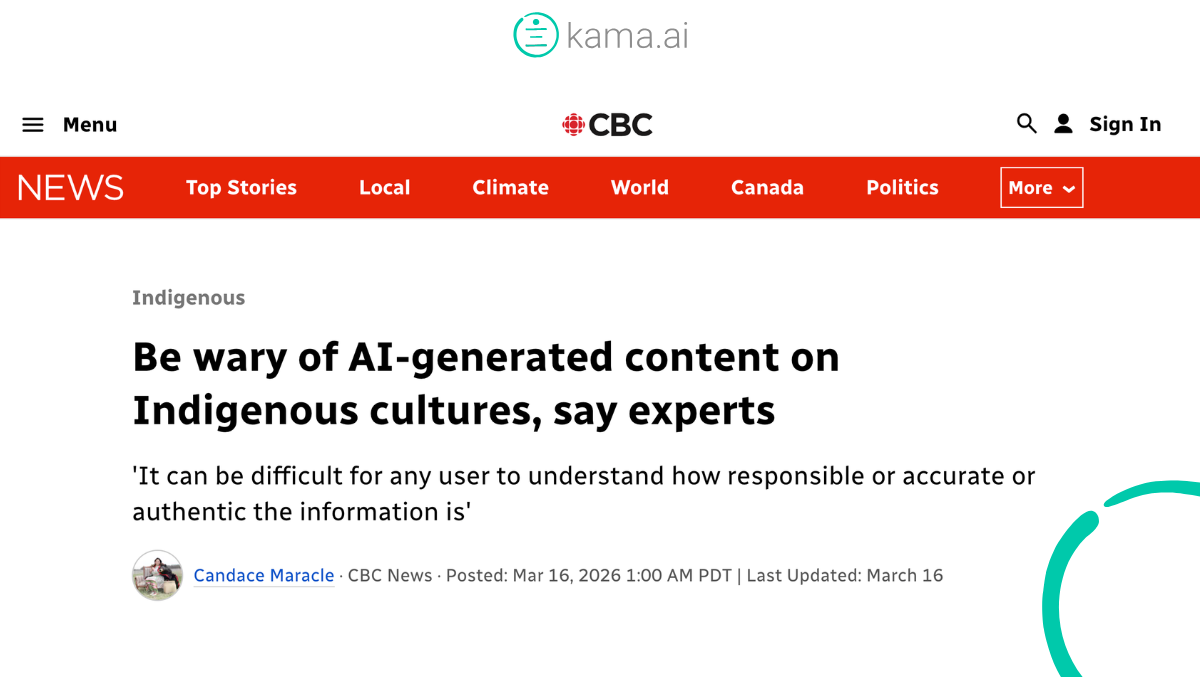
Canada – AI is increasingly being used to create content in Indigenous languages, but experts are raising concerns about accuracy, cultural representation, and governance. A recent segment on CBC News highlighted these risks, exploring how AI outputs can unintentionally misrepresent language and cultural knowledge.
Experts point out that while AI-generated content may look fluent, it often lacks the lived context or community validation that ensures cultural accuracy and respect.
👉 Read the full CBC News segment
_____
Challenges of AI-generated content
Generative AI can produce convincing outputs, but these systems rely on pattern recognition rather than cultural authority or lived experience. This creates several challenges in Indigenous language and cultural applications:
- Content that appears accurate but contains errors
- Cultural teachings presented without context or consent
- Difficulty for users to assess authenticity and reliability
Implications for language preservation
Indigenous languages carry identity, history, and connection to land. When AI systems are trained on incomplete or ungoverned data, they risk:
- Disrupting language revitalization efforts
- Introducing unintentional distortions in knowledge
- Reducing community control over cultural representation
This creates a modern tension between technological innovation and cultural stewardship.
Responsible AI in practice
Experts highlight that certain practices can reduce risk and improve trust in AI-generated Indigenous content. These include:
- Validation of outputs by culturally knowledgeable authorities
- Clear governance and consent frameworks
- Transparency in how AI outputs are generated
- Human-in-the-Loop oversight for sensitive or high-risk content
In research and reporting, organizations such as kama.ai have demonstrated that **Human-in-the-Loop AI** can help balance scale with accountability, supporting outputs that are both useful and culturally respectful.
The way forward
AI has the potential to support Indigenous language preservation and accessibility—but only when built with governance, oversight, and community participation. Accuracy, accountability, and trust are critical for systems interacting with sensitive cultural content.